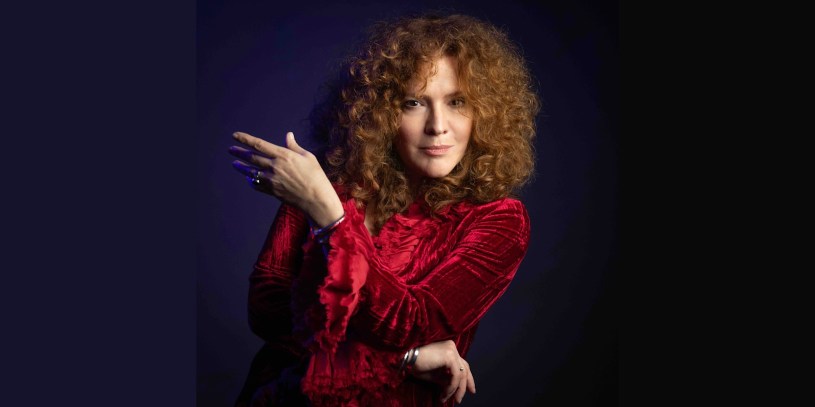
Who is Lily Vakili?: Her Backstory & Her Music
Lily Vakili Biography
Lily Vakili has embraced her life. She calls it “a life lived.” And every aspect has contributed to who she is now. Lily was born in Honduras and learned Spanish as her first language. She lived in culturally rich areas such as Florida, Thailand, and Puerto Rico. Throughout her life, Lily has been a dancer, a biotech and corporate lawyer (with a degree from Harvard Law School), a mother, and more. But at her core, she’s always been a storyteller who is searching for connection. Lily eventually found she could give voice to both the world inside her and the world around her through songwriting and music.
Her Musical Career
Lily is a self-taught musician who used music books and illustrated guitar chords to establish her foundation. “I’d spend hours in my room trying to work out the basic guitar elements of folk and rock tunes. Joan Baez, Chicago, Simon & Garfunkel, [and] the Beatles were some of the artists whose songs I labored over as I taught myself the basics,” she stated in her bio.
Lily began releasing solo material about a decade ago. Then, in 2018, she formed the Vakili Band. After that, she focused on full band recordings, but never fully abandoned her solo work. Over the course of 6 studio albums and 2 EPs, Lily has remained fearlessly creative, writing about everything from her mother and the pangs of nostalgia to modern technology. Her music swelters with a raw passion that clutches the soul and refuses to acknowledge its safe word. Her performances smolder with an intensity that leaves listeners emotionally riveted and breathless. She has crafted a career where the past and future are merely ripples of the moment. Now is all that matters: this song, this line, this word, this note… this breath.
Interview: What Makes Lily Vakili So Special?
Why did you take so long to fully embrace music?
That question gets to the heart of the challenges and self-imposed obstacles in accepting “your ray of light,” as the poet Rumi says. For a time, I felt that being a singer simply wasn’t my right, that I was somehow not entitled to such a beautiful thing. In other ways, I think creativity came so easily to me (like water finding its way down a mountain) that I, very naively, didn’t consider it to be sufficiently challenging. Those two sentiments may seem opposite, but they are both true.
I may have been waiting for affirmation or external validation. I accomplished many things in the interim between leaving the theatre in my 20s and returning to, or as you aptly put it, “embracing” music, but I did not dare pursue my musical dreams publicly until my mother, in a moment of searing clarity during her mental and physical decline, told me “What are you waiting for? No one else will do it for you.” Her words were the catalyst for everything I’ve done since.
I also have a deep desire to make those around me feel loved, valued, and acknowledged. Sometimes, that drive doesn’t square so easily with the obsessive nature of being a committed and productive artist. I had to find my own way, both vocally (where IS my voice, what does it really sound like; that is an entire journey in itself) and philosophically (how to remain attentive to and present for others and also be focused creatively). I’m still working on it.
Do you believe you should follow your muse, even if he/she leads you to change disciplines? Or should you stick to one form of expression and master that?
Absolutely follow the muse. Be fearless, even when unsure, perhaps more so then. Mastering a form of expression may or may not be within your abilities, but the experience of embracing and serving your muse will be deeply rewarding throughout your life. Mastery, in any event, is the impression that others have of an artist, not so much what the artist thinks of their work. It is the pursuit of beauty, understanding, compassion, enlightenment and their articulation in writing, song, visual imagery, or performance that is the thing (and, thankfully, they are the things that cannot be mastered, only sought).
There’s something amazing about your performances. Your sultry delivery wonderfully provocative. How do YOU feel when you are performing? What are you tapping into emotionally to get such heat and passion? Is it something you learned in theater?
Thank you. When I perform my songs for an audience, it is not “theater” and your question gets at one of the fundamental differences for me between being an actor and being a songwriter and singer. The material — the songs — is my own: my songs, melodies, arrangements (occasionally, I’ll do a cover that I’m especially crazy about). So, for the most part, I am not interpreting someone else’s vision (interpretation is a great art, but different from what I am doing). Many of my songs are deeply personal and reveal an offering I intentionally make to every audience. I believe in my audiences; I know without a doubt that they have their own profound, emotional, deeply personal stories, and I sing to our shared experience as fellow travelers.
When I am performing, I feel an intense sense of freedom and personhood. I feel more myself than almost any other time. I seek a clear transmission, and to do that, I offer everything in the moment — which does not guarantee that the transmission being made will be successful — in fact, it is rare, but I’m getting better at it.
Speaking of theater, how did your singing become so natural? In theater, you have to project and enunciate so that the person in the last row hears and understands every word. But when you sing, you pull people in close to you. Was that a conscious choice, or is it just how you perform?
When I first began singing my songs, I did not understand my voice. I didn’t understand how to access my voice, and because of that uncertainty, as a very astute voice instructor told me, I was “pretending to sing.”
Instead, she suggested something that transformed the way I vocalize. She told me to simply “speak” the songs in my natural voice and to gradually allow the song to express itself through my natural voice. She also told me, much to my surprise, that I had a “big” voice, if I chose to use it. This all seemed outlandish to me at the time, but I trusted her, so I embarked on this journey of finding my voice. I’m still very much on the path, but the closer I come to being myself vocally, the more true I am to the words I’m singing, and that has resonated with audiences, so I keep on.
What’s the best thing someone’s ever said about your voice? Something that still sticks with you?
“Your voice sounds like the truth.” That one stuck with me. Of course, I also remember, for very different reasons (!!), the person who said, “I love your voice so much; I want to eat you up!”
How do you know when an idea should be a song? What is your process for turning that idea into a song?
I don’t always know, but I’ll write the idea down in my journal (pen and paper — old school). It might sit there for years before I know what to do with it. More rarely, I will sit down at my desk and tell myself, “Write a song.” I almost always create a near complete form (lyrics, melody, etc.) before introducing it to the band — the parameters are well established in my mind, but there remains plenty of room for experimentation, particularly with versatile, open-minded musicians.
What are you looking for when you perform? Do you want to express yourself, or do you want to connect with the audience?
To me, those are one and the same — the expression and the connection work in tandem. Performing requires discipline, intention, and practice, but once on stage, it is also a way of being radically free.
Did living in warmer climates contribute to your sultry style?
There is a sensuality found in cultures in warmer climates — in music, in literature, in dress, in fruit, in dance — that undoubtedly contributes to how I express myself creatively.
Where was your favorite place to live?
I’ve come to love each place I have lived because natural beauty is universal, as is human connection and friendship. That said, my life in Puerto Rico was spectacularly rich in experiences (not all wonderful, but most were): the music — salsa, merengue, boleros — the dancing, the food, the mountains, the beaches, the jungle, the people. I cried for my Puerto Rico for days when I left, and sometimes I still do.
You’ve done so much in your life. Do all of your experiences inform your music?
All my experiences inform my creative work because living is living, whether being a child, a student, a day laborer, a career professional, a mother, a caregiver, or a singer.
Who is the performer who absolutely does it for you? The one who makes you overcome by passion.
There are so many extraordinary performers — but perhaps fewer who seem to be fully embodied by their art when they perform. There’s a distinction (very few accomplish both) between a performer who is technically proficient or even technically impeccable and one who expresses the ecstatic nature inherent in being a medium for emotional truth (which is what I’m after). Some of the greats that come to mind are Billie Holiday, Enrico Caruso, Iggy Pop, Amy Winehouse, Chet Baker, Janis Joplin, and Stevie Wonder.
How much do you believe your looks influence the way people hear you? Does it heighten the experience to step onto the stage looking like a Hollywood icon?
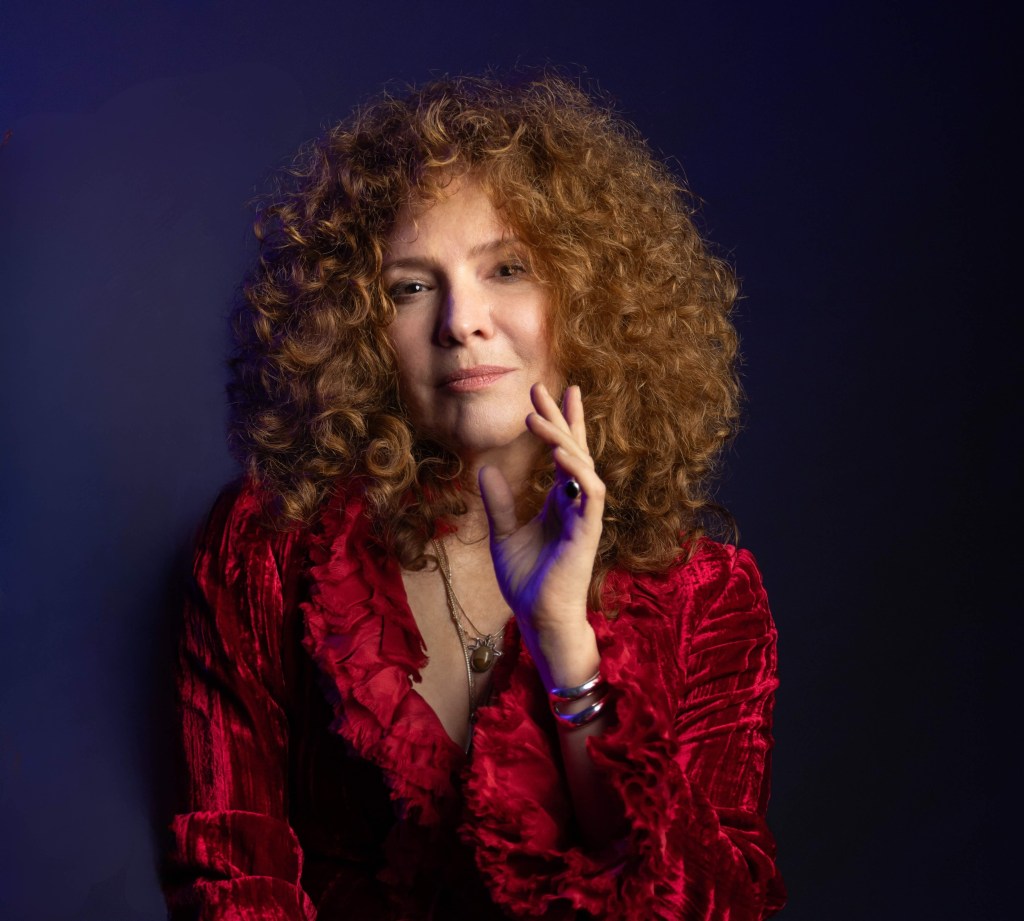
I’m not very good at perceiving how others see me. What I do think about is the offering I am intending to make and whether I feel prepared for the serious work of being a conduit for catharsis. I know I set the bar high. Sometimes that means heavy kohl around the eye, big hair, and a costume that telegraphs, “I am here.” Other times, it’s super low-key, and I let the song and music do all the work.
What can we expect in your live show?
On a good night, you can expect to feel part of something real and personally meaningful, something only the people in the room are experiencing, and something we experience together. The setlist varies depending on the venue, the lineup, and the “feel” of the night. The band knows I’ll move around on the set list, dropping one song at the last minute and adding another — it’s part of what makes for a dynamic, present performance. I don’t dial it in.
What makes it a great show for YOU?
Sensing spontaneity in the audience tells me that things are going well. Movement, shout-outs, dancing and, sometimes, a sort of quiet that comes after a particularly good interpretation of a song — a quiet that is full and rich and spills into applause.
How do you know when you’re in the zone and delivering the best performance?
I know I’m doing well when I feel myself levitating, when my body becomes a transmitter and channel for the music.
Lily Vakili’s Latest Releases
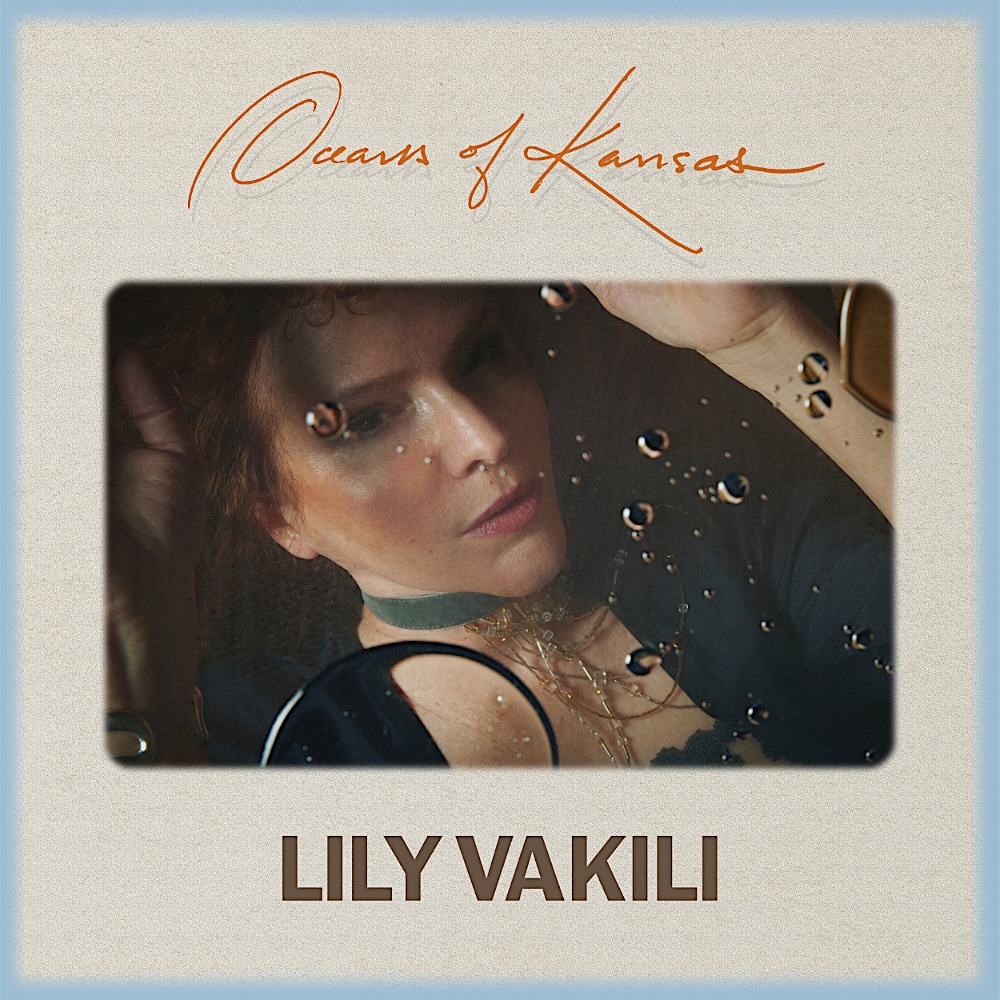
‘Oceans of Kansas’ (2025)
The critically acclaimed Oceans of Kansas was released nearly a year ago. The album was inspired by Lily making a stop at Sternberg Museum of Natural History in Hays, Kansas, while on tour. At that moment, she connected the dots and realized that she was “the archivist, the archeologist,” of her own life.
The sonically rich album explores and catalogues both the beautiful and bittersweet elements of her soul. She shares intoxicatingly intimate moments that purr with a luscious bluesy heat, like “Maybe It’s All Over” and “Photograph.” There’s a gentle, joyful ode to carefree that is laced with serenity called “April Fools.” The album opener, “Okoboji,” is an upbeat celebration of letting your guard down with friends that drips with shades of Joplin. “Tannersville,” which closes the album, is an anthem to staying true to yourself. It burns like a fuse racing to its inevitable destination, making for a scorching finale.
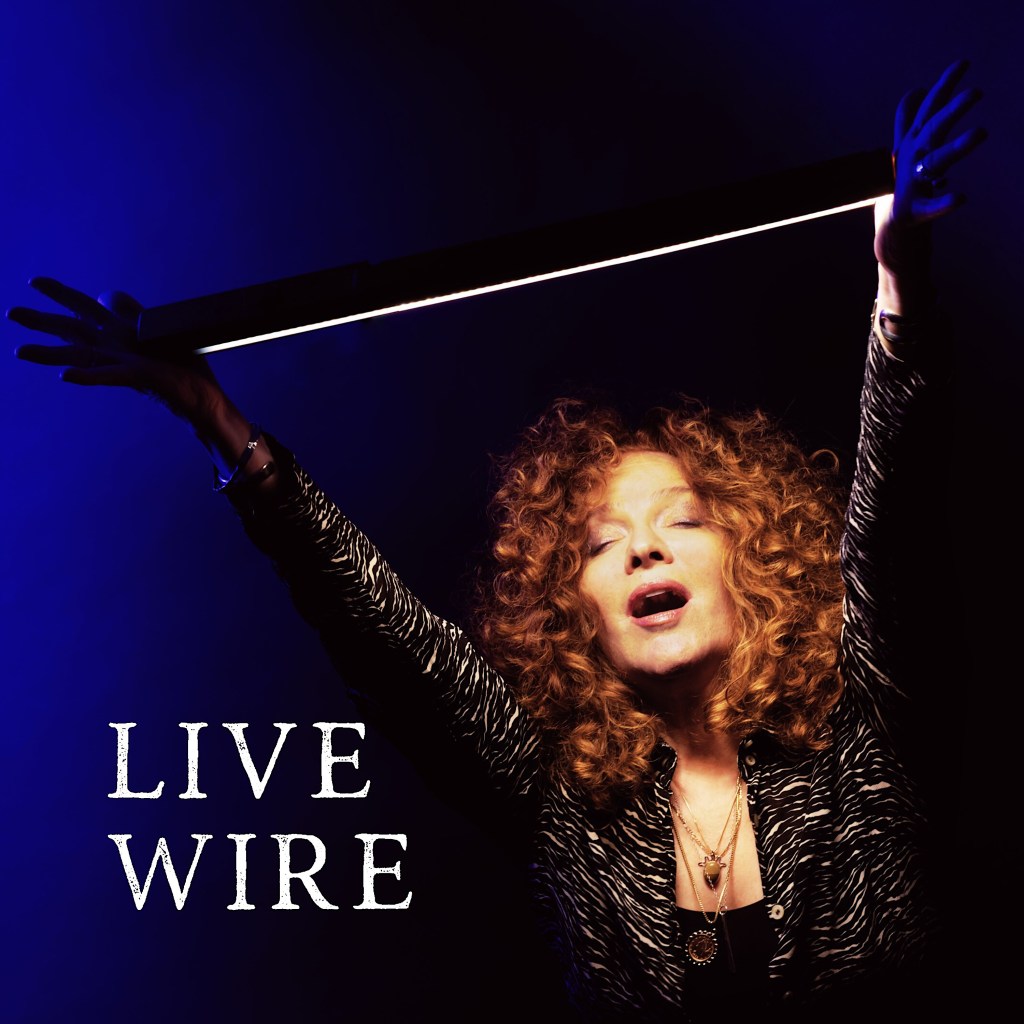
Live Wire’ EP (2026)
Lily’s latest release (May 2026) is the result of her understanding that her music is most compelling when she performs it live with a band. So for this EP, Lily enlisted her touring band: Eric Burns on guitar (Super Yamba Band, Robert Finley), Joseph Yount on drums (Super Yamba Band), and Drew Hart on bass (The National Reserve). Together, they worked with her collaborator, Reed Turchi, a Grammy-Award winning, Emmy-nominated producer/engineer, at his studio, Second Take Sound, in New York City. The goal was to capture a live in-studio session.
While the majority of the EP is an attempt to deliver authentic live renditions of songs Lily has lived with for many years, such as “Lake City Blues” and “Had a Penny,” from her Meadowlands album, there are two new songs on Live Wire. “Anybody Knows” is a solid, gritty GRWM song that you might play while pampering for a night with someone whom you desire getting a little scandalous with. Conversely, “Heart’s Afire” is a tender reflection on love lost.
Put this EP on, close your eyes and let Lily and her band take you away to a place where you can linger in the embers of her alluringly sinful vocals and languish in the soulful groove of her band.
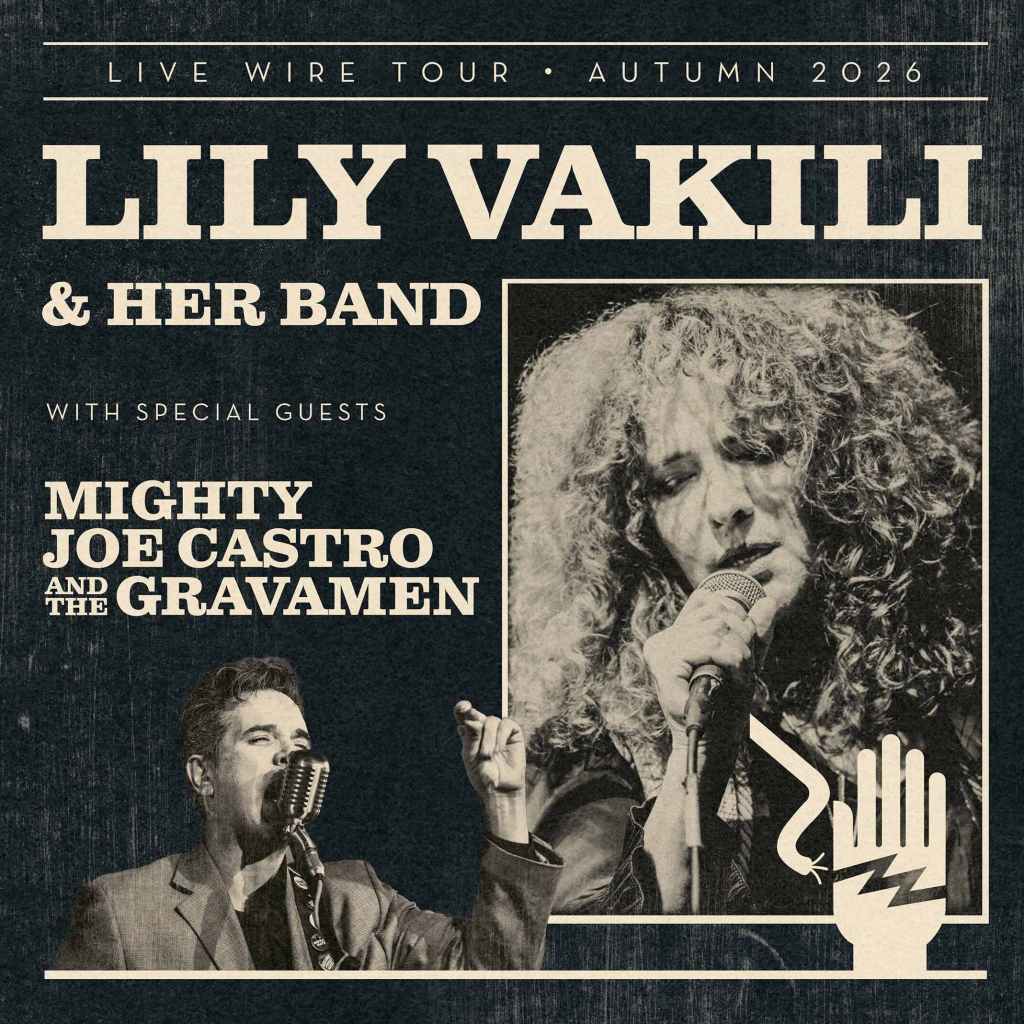
Lily Vakili 2026 Concert Tickets & Tour Dates
| Date | City | Venue |
|---|---|---|
| Sat., Sept. 26, 2026 | Frelinghuysen, NJ | Woodland Stage at Marksboro Mills |
| Wed., Oct. 7, 2026 | Pittsburgh, PA | Government Center* |
| Thur., Oct. 8, 2026 | Cleveland, OH | Beachland Tavern* |
| Sat., Oct. 10, 2026 | Chicago, IL | Reggie’s Banana Shack* |
| Mon., Oct. 12, 2026 | Detroit, MI | Small’s* |
| Wed., Oct. 14, 2026 | Nashville, TN | The 5 Spot* |
| Sat., Oct. 17, 2026 | Mechanicsburg, PA | Metropolis Collective* |
* Mighty Joe Castro & The Gravemen opening.
How to follow and support Lily Vakili
Lily told Entertaining Options, “The best support comes from coming to my live shows. Buy a ticket, pick up some merch, sign up for my mailing list, and say hello after the show. And, of course, I appreciate the follows on Spotify, Instagram, Facebook, and YouTube. Comment or send me a DM and let me know what songs you like and what they mean to you.”
Featured photo: Photo: Bill Heuberger.

