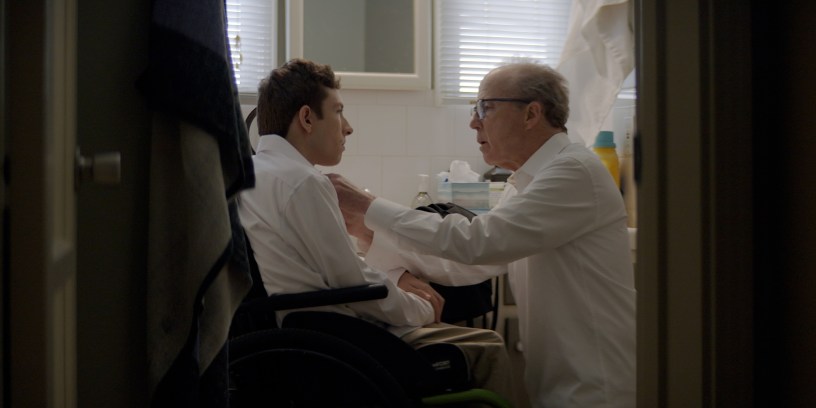
The world is a beautiful place. Quiet miracles happen all around us every day. Often, we’re not paying attention to the moments that matter. Thankfully, there are people like Anthony Lucero and movies like Paper Bag Plan (Blue Sun Pictures) to remind us of what’s important.
If you’re not on IMDb or a subscriber to entertainment industry trade publications, you might only know mainstream films and actors. And that’s not a bad thing. But if you are ever curious enough to search for gold by digging just a tiny bit deeper, I promise you won’t regret it. That’s where you’ll find incredible treasures, like Anthony Lucero.
Anthony got his start by working on some of the biggest blockbuster films and franchises ever made — Star Wars films, Harry Potter films, Marvel films. But what he thought was his endgame turned out to merely be a prelude. His drive to tell truly impactful stories led him to explore the power of the personal experience. Anthony’s award-winning movies are not three-hour, action-packed adrenaline rushes. They are quiet, life-changing stories that offer genuine hope by championing the miraculous human spirit.
Entertaining Options was blessed to have a long conversation with this creative wonder. To help give the transcription a tighter focus, we distilled the exchange down to the most important moments.
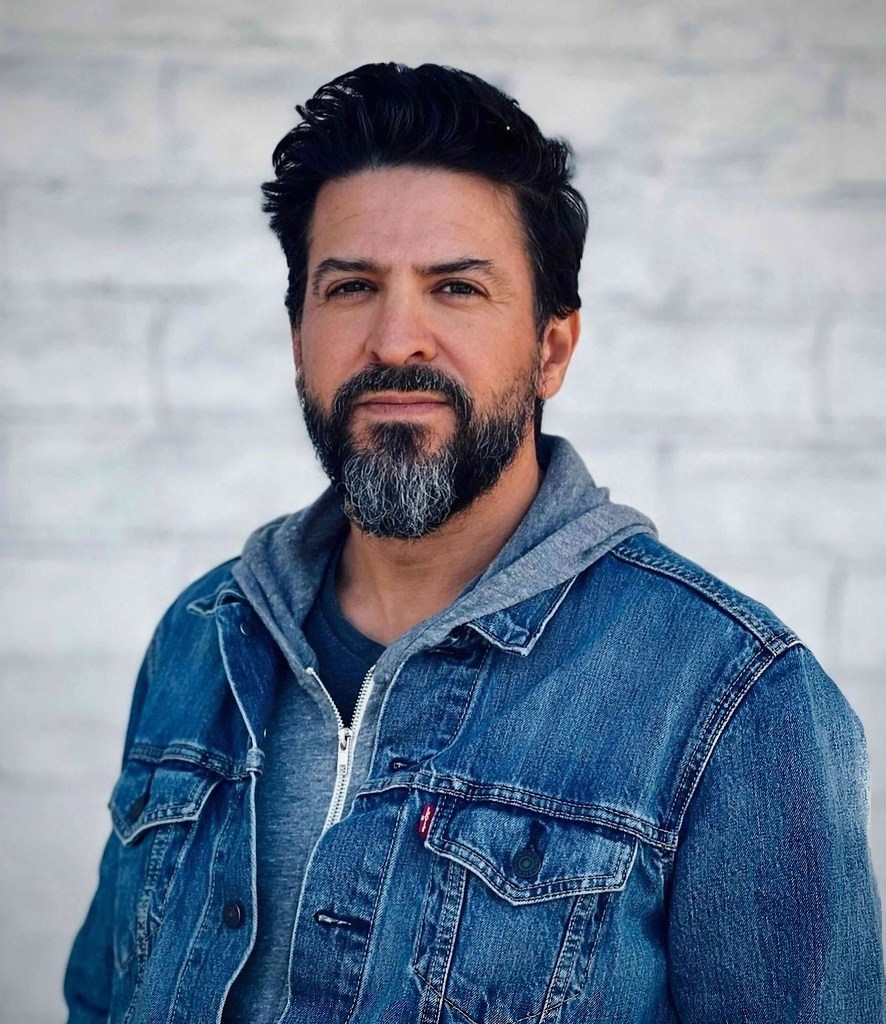
Behind the Scenes of ‘Paper Bag Plan’ with Director Anthony Lucero
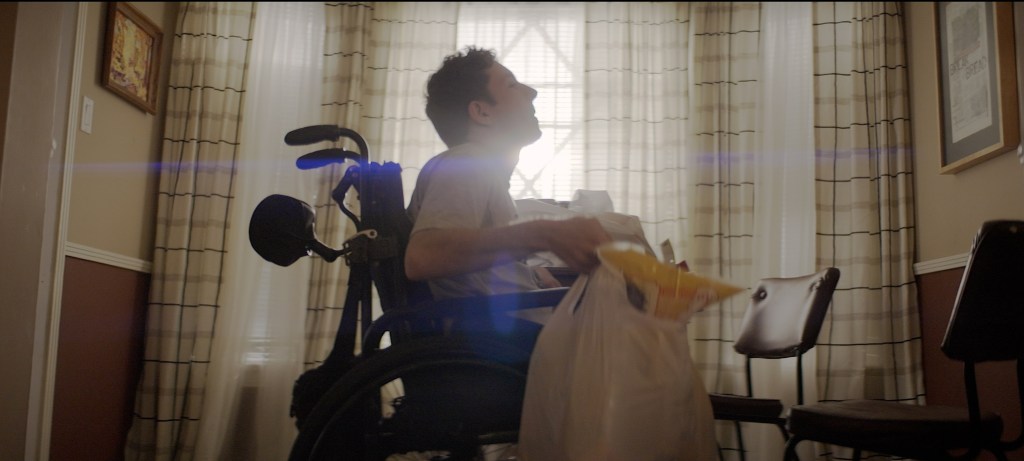
Paper Bag Plan is a powerful story about an aging father who is facing cancer and wants to get his disabled son a job and give him some independence before his time runs out. His plan is to train his son to bag groceries. The movie felt incredibly real. It was like a documentary that was shot as a narrative film. Was that the intention?
It comes from a real place. I used a cinematographer [Jesse Dana] who only shoots documentaries, so that was sort of the beginning process. I just try to keep my films authentic. I don’t want to paint caricatures. I want people to experience or feel what I’m feeling. You have to make it authentic. As soon as you’re not, the audience can tell. They’re like, “You’re trying to manipulate me.” I’m not trying to manipulate the audience. I’m just trying to give them a feeling.
I loved that the scenes played out with real dialogue. It wasn’t storytelling conversations designed to drop information and move on to progress the plot. The exchanges between characters felt genuine. There was time to breathe and process the words. You could catch the feelings and ride the emotions along with the characters. It helped create a connection.
I’m glad you feel that way because a lot of TV today, they throw out tons of information at you. I can’t absorb all this and nor do I want to. There’s a lot more detail that was in the screenplay, and it just tends to be a bit too much. At a certain point, it’s like, “Okay, I need to dial this back. I need to take out this other block I had in there. Originally, the father had a sister, but I pulled that out because I didn’t want to overwhelm the audience. Let’s just let them absorb these 2 characters as a father and son story. Let’s just simplify this a bit and make it more enjoyable.
There’s a delicate balance when you start streamlining. You want to tighten the story without making it feel rushed. Especially in a film like this.
The audience is smart. But don’t throw too much at them; and don’t throw too little. It’s tricky. You also want to put those twists and turns in there because you don’t want the audience to be too far ahead. You want them guessing a bit as they go along. As soon as they’re like, “Oh, I knew that was going to happen,” the audience feels like it’s ruined. Or it’s like, “Come on, you can do better than that.” It’s very tricky.
Another refreshing point of Paper Bag Plan is that it is a small story. It’s not about saving the universe, it’s about 2 people. And that intimacy made it bigger than a Marvel movie.
That’s totally by design. I want people to feel the same way about a father teaching his son how to bag groceries as they do about superheroes saving the universe. Jaws was one shark, but you get the feeling that “This is everything!” But it’s just one shark.
It’s a game with me. It’s kind of a game and it’s a challenge. I want to take something so minuscule and innocuous for a lot of people and make it epic. That’s kind of like where my stories start. I come from a very working-class, lower-middle-class neighborhood. Everything in my life as a child growing up was a big thing. Getting a job at Burger King was a big thing, so I still retain a lot of that. I still retain “We’re not going to save the universe. We’re just going to save our home. We’re just going to save this one person. We’re just going to save my child and make a better life for him.” That’s kind of the Rocky story that I like to tell. Paper Bag Plan is just let’s tell something small but epic and make the audience come along for this ride and make it seem like Endgame. It is that idea.
How does someone go from working on blockbuster special effects, like the Avengers movies, to Paper Bag Plan? Was that your plan all along?
No, the end goal was working at Industrial Light & Magic. That was the endgame for me. Ever since I was a child, since watching Star Wars and The Empire Strikes Back, I knew I wanted to go work for that company. And that’s what I did. But, you know, when you get there — not just there, but in a lot of jobs — you’re like, “I’ve reached my goal. Now what? What’s next?” I am that shark that has to keep moving.
What made you want to try making your own movies?
I’ve said this publicly, but when I was working at Industrial Light & Magic, I would work on these films for endless hours. Then you sit in the theater, and you’re like, “This is my one year of labor? What is this? It’s horrible.” I would do that year after year, and you have to tell yourself, “Shut up… shut up or do something. If it’s so easy to make a good film, do it.”
So, I began to write East Side Sushi. The goal for that was zero visual effects, and it was going to concentrate on the thing that these other films didn’t concentrate on. It was going to concentrate on character development and acting and story, and all that. And so that was it. The film did really well. [The award-winning, critically acclaimed independent film holds a 95% “Fresh” rating on Rotten Tomatoes.] I did not expect that. It was just a film that I was going to do because it was time for me to make a feature. Nothing else. And when that film did so well, I thought, “I guess I’ve got to keep going with this.”
Paper Bag Plan is so insightful it feels like it was written from personal experience. Is this a story from someone you know? Was it something you grew up with?
My brother was disabled. He couldn’t walk. He couldn’t speak. He couldn’t move his arms. So my mom cared for him. She fed him and bathed him. Twenty years ago, I did a short documentary on my mom and my brother. It’s called “Angels and Wheelchairs,” and it’s on YouTube. It’s 5 minutes. It gets in and out. It tells you a lot about my childhood. [See video above.] My brother passed away when he was in his late 40s, back in 2013. My mom was in her late 70s, and she was still lifting him out of that chair and into the bed on her own. So that was part of the inspiration. The other inspiration was my sister, Margie, who died of cancer in 2018. She left her daughter, Sarah, behind. Sarah has Angelman syndrome. My other niece takes care of her now.
I always had this thought of what happens when parents pass on and they have a child with a disability? We were dealing with this personally, but there must be other parents who have children with disabilities who are dealing with this. When my sister passed, that really kick-started the rest of the film. I’m like, “Now I need to finish this idea that I had.” So Paper Bag Plan was inspired by my mom and my sister.
I know I keep returning to the authenticity of this film, but it is so remarkable. How did you find the actors? Cole Massie and Lance Kinsey are phenomenal.
When I finished the screenplay, I hired a casting director. His name is Russell Boast, and he specialized in actors with disabilities. The first idea was: let’s see if this person exists, because this character is kind of specific and it had to be an actor with a disability. It wasn’t going to be some able-bodied actor using a wheelchair. It had to be a wheelchair user or somebody with crutches or something.
There were about 50 or so actors who came through with a disability, and I was not finding my actor. I didn’t want to just get an actor with a disability because they had a disability; they had to be a great actor too. I wasn’t going to make this film unless I found a great actor. Cole Massey was the last actor to come, and it was like, “Boom!” I found my Billy.
Did the process get any easier after you found Cole?
No, it was scary because I just wanted to see if that person [Billy] existed before I did the film. We found Cole Massey, and I thought, “Now what do I do? How do I make this film? I don’t have any money.”
It took a couple of years after that to actually make the film. We had funding, and then we lost funding because the funder wanted to be in the film, and I couldn’t do that, so I walked away. My wife [Ke’alohi Lee Lucero] funded the film, so this is a truly independent film. As independent as it gets. She paid for the lion’s share of it.
Once we found Cole, we started to cast around him. [In the original screenplay, Billy was being raised by his mother. However, when they couldn’t find the right actress, Anthony rewrote the part to be a father.] We hired Lance Kinsey, who just knocks it out of the park. He is just amazing. I mean, I’ve heard this before where an actor could just read the phone book and it would be phenomenal. Lance is one of those actors. Every line he says is believable.
Lance was perfect. The emotional arcs during conversations were beautiful. The way his focus always returned to his love for his son felt so heartwarming and real.
Everybody asks about that one line in the film. He says it towards the end, and it’s in the trailer as well. He says, “I used to pray if I were to die unexpectedly, the Lord would have mercy and take Billy with me. I don’t pray for that anymore.” That was a line from a friend of ours. Her name is Tina. She has a child with Angelman syndrome.
After I wrote my screenplay, I gave it to Tina to read. I gave it to a lot of people to read. I gave it to actors with disabilities, caretakers, and lots of other people. She said, “Selfishly, I would pray that if I died, God would also take Nicole [her daughter].” It’s so hard. It’s so heart-wrenching. That line was always implied, but I never actually said it in the film. And when she said it to me, I asked, “Can I use that line in the film?” She said, “Yes, of course.” And that’s the line that just gets people, because that line is the lived experience. That is something you don’t know unless you’ve experienced life as a caretaker.
Going back to Lance. It’s not just the line, it’s the way Lance delivers it. It’s a one-two punch right there. It gives me goosebumps every time I think about it.
Every time I hear that line, it brings me to tears. It’s such a powerful, honest moment. We’ve covered a lot. Is there anything you’d like to make sure we get in? Anything I forgot to ask you about?
I haven’t spoken of the score in a long time. The score by Alex Mandel is amazing. He’s the other piece of the puzzle. It was a big 60-piece orchestra, and it just brings out so much emotion in the film. It’s gorgeous. The score takes it to the next level. I mean, it’s trickery. Once I put Alex’s score onto my images, it bumped them up. It felt bigger than it was. I’m just so thankful.
Other than that, the film was written for Oakland, CA, as this film was to take place in the same world as my last feature, East Side Sushi. But due to budget constraints, we filmed the majority of the film (their home and the Handy Market) in Burbank. Location was important, as the end of the film was written for an A’s game at the Oakland Coliseum. But now, the setting of the film does not necessarily take place in any specific city. But if most people feel it takes place in Oakland, then great, I’m good with that.
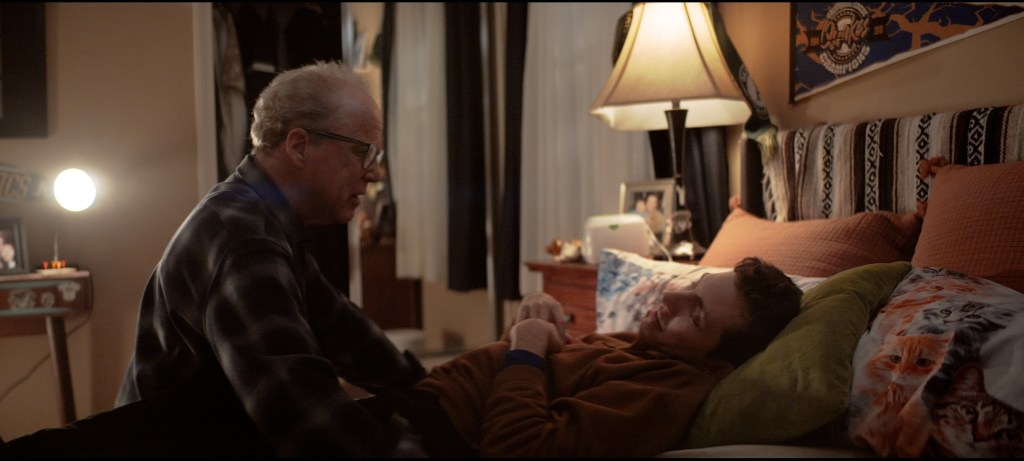
Review of Anthony Lucero’s ‘Paper Bag Plan’
Paper Bag Plan is an extraordinary film. It takes a beautiful look at the ever-blossoming resilience of genuine love that a caregiving father has for his disabled son. Despite daunting adversities and a relentless stream of setbacks that endeavor to crush his spirit, Oscar never stops fighting for his son. Paper Bag Plan is a masterpiece that reminds us that it’s not the body, it’s the heart that makes a champion.
Lucero’s deft storytelling is pulled from lived experiences and gives Paper Bag Plan the spellbinding power of authenticity. Lance Kinsey and Cole Massie are pure magic. Their relationship is rooted in a wonderful chemistry that brings to mind the iconic friendship of Andy Dufresne and Red. If tears of joy were a currency, Paper Bag Plan would be one of the highest-grossing films of all time.
Paper Bag Plan is an independent movie that was funded by Ke’alohi Lee Lucero, Anthony’s wife. There is no marketing other than word of mouth. If this article inspires you to watch the film, and you love it as much as we (and festival audiences across the country) did, please consider telling a few friends to help get this heartwarming movie the visibility it deserves.
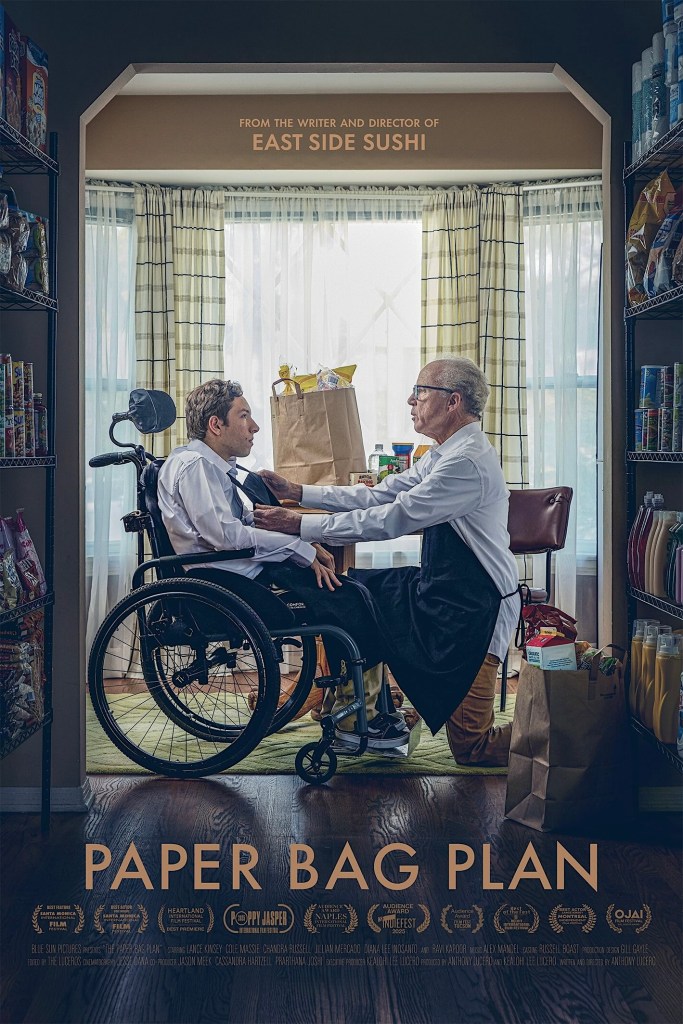
How to watch Anthony Lucero’s ‘Paper Bag Plan’
Prime Video
Rent: $2.99 SD/$3.99 HD
Buy: $4.99 SD/$7.99 HD
Apple TV
Rent: $2.99
Buy: $5.99
Google Play
Rent: $2.99
Buy: $4.99
YouTube
Rent: $2.99 SD/$3.99 HD
Buy: $4.99 SD/$7.99 HD
Fandango At Home
Rent: $1.99
Buy: $4.99
Where to Follow Anthony Lucero’s ‘Paper Bag Plan’
Blue Sun Pictures website • Instagram • Facebook
Fun fact: There is a scene in Paper Bag Plan when Oscar invites the neighbors over to shop in a store he set up inside his home so Billy can practice bagging groceries. A few of the neighbors reluctantly agree, but no one really commits that strongly. The emotional tension of Oscar and Billy waiting to see if anyone will show up is not only incredibly powerful, it’s a secret homage to Frank Capra’s It’s a Wonderful Life.
Featured image: Lance Kinsey as Oscar and Cole Massie as Billy in Anthony Lucero’s “Paper Bag Plan.” Photo: Jesse Dana.


I love this article! Thank you Allen.
LikeLike
My pleasure. It’s an incredible film!
LikeLike