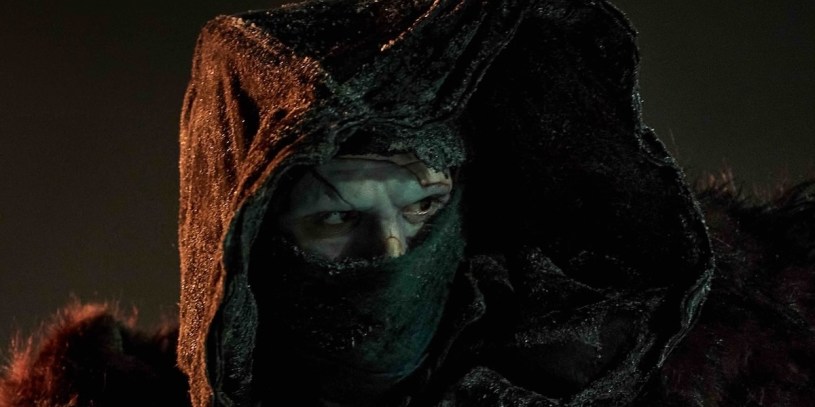
There are very few literary characters who have achieved the recognition that Frankenstein has. And yet arguably none has been so misunderstood. How many times have you heard someone boast about their knowledge of the character by claiming that Frankenstein is the name of the scientist, not the monster? This is not true. Victor Frankenstein is the villain of the story. He is the monster. His creation, on the other hand, is a child searching for love and acceptance. Someone trying to find their place in a world that makes him feel like he belongs dead.
Guillermo del Toro, writer/director/producer of the new movie, agrees. “Like all tyrants, Victor believes himself to be a victim. Everybody that is a tyrant loves being a victim: ‘Poor me.’ And in the meantime, they’re destroying everybody’s life. That’s Victor.”
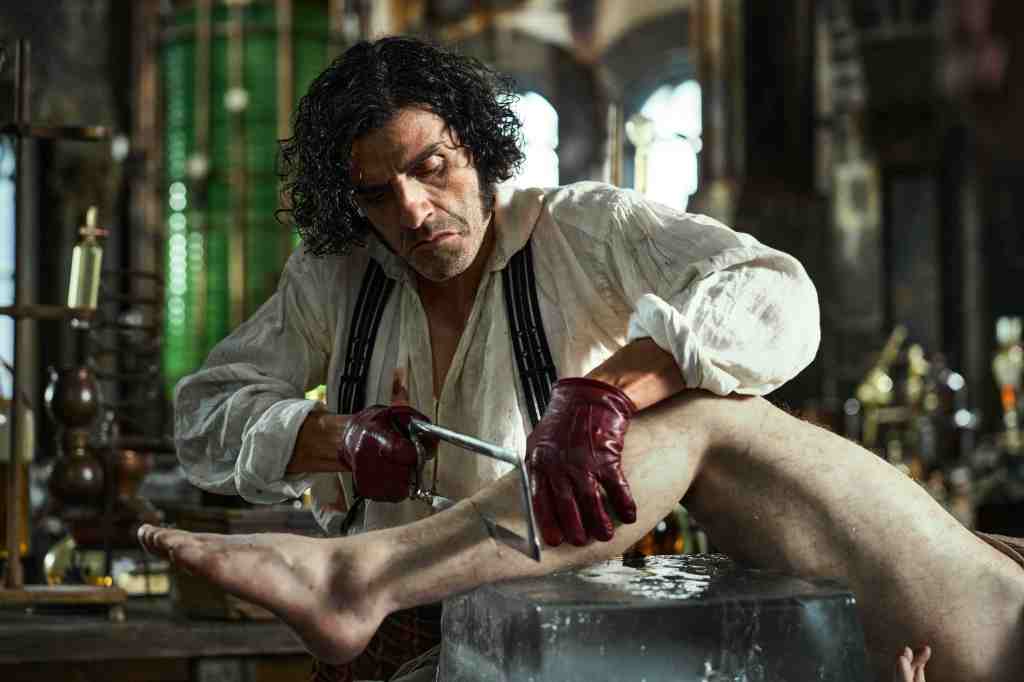
Just a few weeks ago, Guillermo del Toro’s Frankenstein had a limited theatrical run. However, its Netflix premiere, which is happening on Friday, Nov. 7., is being touted as the bigger event. To help prepare for the release, we’ve taken a deep dive into what this film means to Guillermo and many other individuals involved in the project. We’re going to explore this production of Frankenstein through the eyes of the people who brought it to life.
“Ever since I was a kid, since my first Super 8 movie to now, I’ve dreamt of making two movies: Pinocchio and Frankenstein,” del Toro revealed. “I thought we were telling the same story: what it is to be human, what it is to be framed in a life by eternity and death, both forces. I wanted to make Frankenstein as personal as it could get.”
Producer J. Miles Dale concurred. “This is existential, about life and death. When you talk about legacy movies, this is that for Guillermo. Having been on his mind for most of his life, he’s seen this movie in his head — we’re not leaving anything on the table in terms of what we’re doing, who we’re doing it with, how we’re doing it, and what the result will be.”
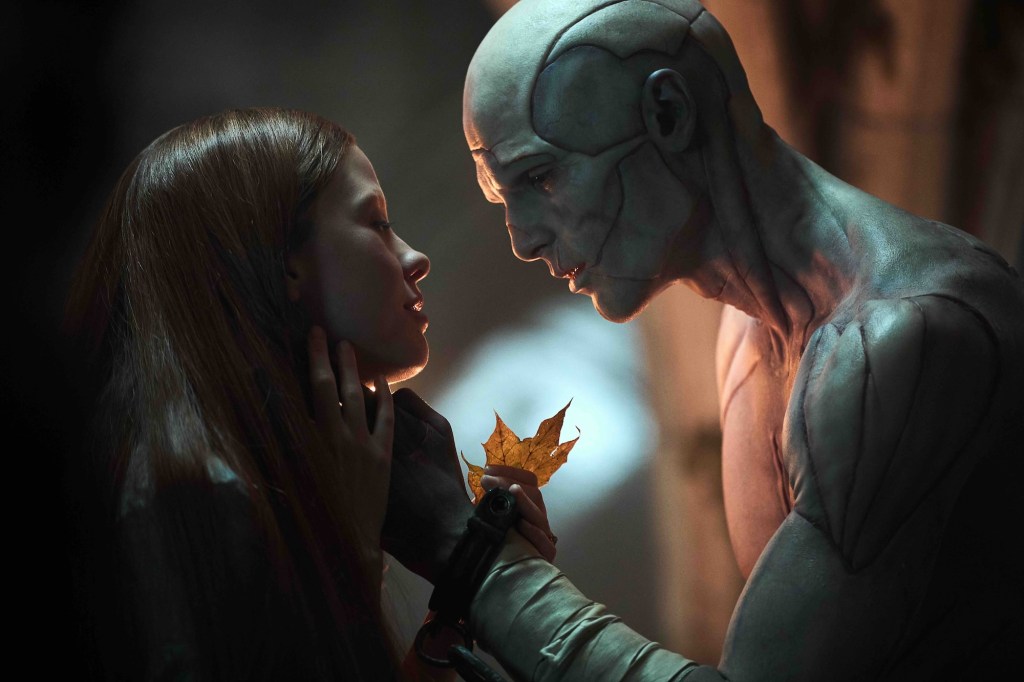
“One of the things that Guillermo does probably better than any storyteller,” Producer Scott Stuber added, “is he really looks at humanity and who we are and looks past the things that we judge each other on, whether it’s race, whether it’s gender, whatever it is, he’s saying, ‘Who am I inside?’ Guillermo tells stories about how we actually overcome the things we put in front of each other. He explores how we find out who we really are, what true humanity is, and how we can love each other honestly and openly.”
“Everybody in the movie has a failing and a lack,” del Toro pointed out. “I love that. They all need love, because that’s the only answer, right? I think it’s a very tender movie. For me, it’s a melodrama and a drama. I don’t see it in terms of a horror movie.”
“I broke down in tears because it just was so emotional,” Oscar Isaac (Ex Machina), who plays Victor Frankenstein, recalled after reading the screenplay. “I could feel Guillermo saying very personal things through the mouths of Victor and the Creature. I related to a lot of those things that were being said in a very deep way. There’s a beautiful circularity to it, this idea of fathers and sons and how trauma gets passed on, how good and evil are two sides of the same coin, and they’re constantly flipping back and forth, how words don’t necessarily get us closer to the truth.”

Guillermo also wanted this movie to “test the capabilities of every single craft in moviemaking.” He wanted huge sets and an elaborate wardrobe. He wanted to create a luscious operatic film.
Production Designer Tamara Deverell (Nightmare Alley) talked about the scope of the sets, noting Frankenstein’s lab was created in an abandoned water tower that was several stories tall. It features marble floors, a custom-fabricated metal spiral staircase, and an enormous circular window that is a focal point of the set. She also disclosed that the House of Frankenstein was created using four residences: Gosford House in East Lothian, Scotland; Burghley House in Lincolnshire, England; Dunecht House in Aberdeenshire, Scotland; and Wilton House in Wiltshire, England.
To capture the enormity of the sets, Director of Photography Dan Laustsen (The Shape of Water) used an Arri Alexa 65 camera with more wide-angle lenses than on his previous del Toro productions. He also inserted diffusion filters inside the camera to create a more romantic film style. Laustsen explained, “We can have deep blacks but still a kind of flare in the highlights. It’s organic and beautiful.”

Costume Designer Kate Hawley (Crimson Peak) had her work cut out for her. Since the film takes place against the backdrop of the Crimean War, Hawley researched the mid-19th century. However, to give the characters the right vibe, she admitted creative freedoms were required. For example, “Guillermo wanted Victor [Frankenstein] to be a dandy and have a little bit of a punk element.”
For Elizabeth Harlander, played by Mia Goth (Pearl), Del Toro wanted the character to be ethereal. Hawley achieved Elizabeth’s overall look by employing two key accessories: a classical shawl authentic to the Crimean War period and veiled bonnets. “Religious language is a big part of Elizabeth’s character, and that bonnet is like a halo,” Kate said. “I used colored veils to move away from tradition. Mia has such an amazing, mercurial face — one of the first fittings we had, we put that bonnet on her, and we put the yellow veil over her, and she just became this other creature.”
Mia Goth echoed the notion that it was the wardrobe that catalyzed her transformation into Elizabeth. “I only ever really felt like I was truly connected to her once I was in the costumes and on the set and everything was working in alignment.”

“Elizabeth arrives in the story having come from a convent education,” Mia continued. “I landed in Toronto, and this entire experience was all very new to me. I started to see a lot of parallels between me and Elizabeth in this experience that I was going through in real time. It took a lot of work to finally realize that in my most quiet moments, when I can be my most authentic self, that’s where she exists.”
The last aspect of the production is the all-important soundtrack. Alexandre Desplat (The King’s Speech) handled this crucial element. “I had to push myself to different pastures, further territories [following] emotions that go from intimate and gentle to huge, passionate, lyrical, crazy, with twirling strings and organs, and an 80-piece choir,” Desplat recalled. “This energy that Guillermo puts in his film, I tried to convey with the music.”
“Music can create so many colors, so many sensations, so many emotions,” he explained. “You can create depth of field just by having a larger orchestra in a scene, and then a smaller [one] in another scene.”
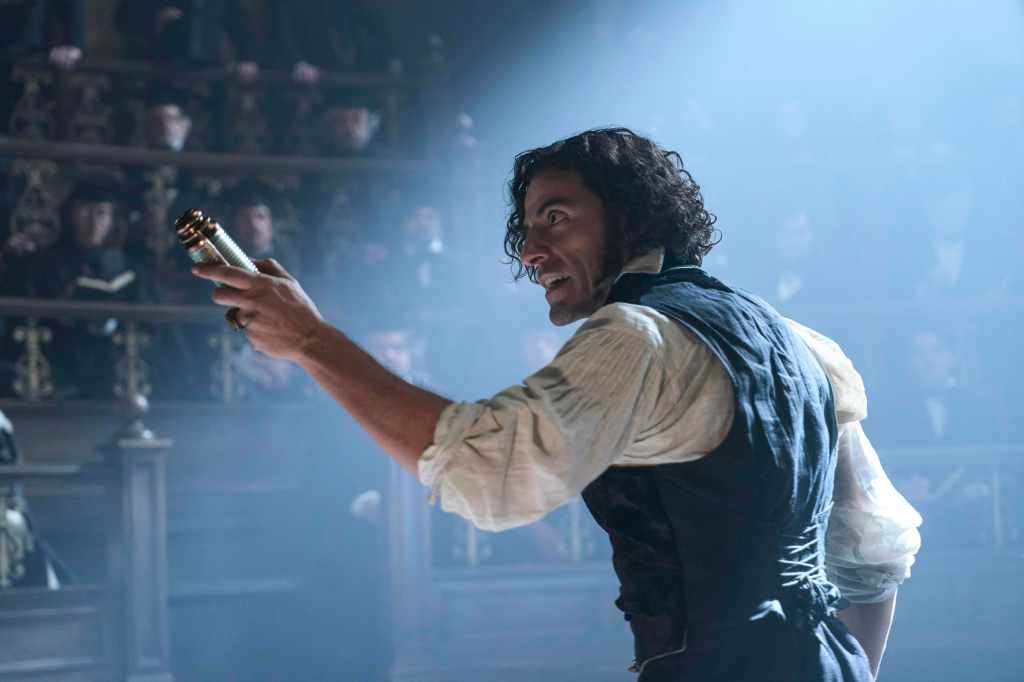
The composer began work on this project two years before production even began. He and his team worked with an orchestra, a choir, church organs, Norwegian solo violinist Eldbjørg Hemsing, and subtle electronic sounds to craft the score’s aesthetic.
But Desplat was quick to point out, scoring a film isn’t about marking every event or scene. “To have a good score, you have to find the soul of the film and create another dimension of sensation, of poetry, of spirituality, that follows the film and amplifies the emotions.”
Guillermo del Toro’s Frankenstein will be released in the United States on Netflix on Nov. 7, at 3:00 a.m. EST.
Guillermo del Toro: Instagram
Netflix: Instagram
Thanks to Netflix for supplying the production notes, quotes, and production stills that were referenced and used throughout this article. Featured photo: Jacob Elordi as The Creature in Frankenstein. Ken Woroner/Netflix © 2025.
 Entertaining Options